2012 - Is it Armagedden, or is it about YOUR MONEY !!! Sep 25, 2011 2:11 pm If 2011, with so much crap going on, is a "13" year, then what has 2012 got in store for us, because just after the 21st Dec 2012, WE HIT 2013... Is this the Beginning of the END ? 2013 = is all about money ! 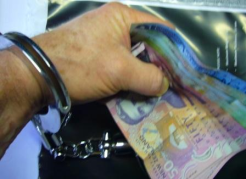 CAN YOU DO ANYTHING ABOUT IT? SOME CAN, MOST CANNOT. By keeping money in the Bank, you could lose it as the editorial from the New Zealand Investor August edition explains. Banks are privately owned businesses, and if Their Borrowings are greater than the interest and principal payments coming in from "you and I", the Banks customers, and they have difficulty paying their debts, they go insolvent like any business, and the Government has No Obligation to bail them out. By saving money, and holding onto it at home, instead of in a Bank; i.e. buy a small home-safe from places like the Stationary Warehouse, the Bank cannot close the door on you... you own it, and the horror story about Bank Foreclosures (below), may not affect you as much. FOREWARNED IS FOREARMED ! Most people and businesses are in debt to a Bank. Therefore, most are at the mercy of the Banks' dealings. When you have CASH in your pocket, the money is in your hands; when you have "plastic in your pocket", the money is on a screen display and the Bank has it. In other words, you have no real Control over Your Money, and the Banks don't want you to either. You need to be aware of what may happen to your money if and when the looming market crash hits, and according to my insight, its not unreal and its not far away! I'm not an advocate of doom and gloom, in fact I am an optimist and a thinker. But, take a look at the link below, (copy and paste it into your browser) if you feel you're ready to see something that will help you appreciate what "the money lenders", and some Governments, don't want you to see, or, pay too much attention to. MICHAEL MOORE VIDEO http://www.youtube.com/watch?v=KrFQs5X-I1Y&feature=player_embedded The Video Link above, is recent. New Zealand and the rest of the world are at the mercy of the big Corporate Giants. Power in the wrong hands Corrupts, and Capitalism, Controlled by the Minority, is dangerous. While New Zealand's Banks "appear" to be financially stable, the Reserve Bank of New Zealand is demanding the Banks put systems in place, to make it easier for Government-Appointed Officials to step in, should any of them become insolvent. The following information is from "The New Zealand Investor" - August 2011; so it's recent. Banks in New Zealand have missed the first deadline to respond to a Reserve Bank consultation document that aims to make it easier for a Government-appointed statutory manager to take over the management of a failing Bank. The Reserve Bank of New Zealand (RBNZ) issued its Pre-Positioning for Open Bank Resolution (OBR) document in March, hoping for a response by its June 30 deadline. The RBNZ has now given Banks until September 30 to respond. In short, the RBNZ wants all Banks to put computer systems in place to help state-appointed officials run the Bank, should it become insolvent or be put "under statutory management, for some other reason"; like Allan Hubbard and the South Canterbury Finance takeover. When implemented, the system would allow GOVERNMENT officials to understand the financial situation of the Bank within hours of it failing (going insolvent), freeze customer bank accounts, and re-open the Bank's doors within 24 hours to provide Bank customers with (in some cases) limited access to their accounts. The RBNZ would be keen TO STOP NERVOUS SAVERS CLEARING OUT THEIR ACCOUNTS AT THE FIRST OPPORTUNITY. Should a Bank fail, its shareholders, customers and suppliers - unsecured creditors - risk losing their money, as no Bank is a part of the government's Retail Deposit Guarantee Scheme. It appears from the consultation document that the RBNZ is keen for the Government to avoid the costs associated with supporting a troubled Bank as it did in 1992 when the BNZ hit hard times (this was clearly indicated on the BNZ's Numerological chart, that I identify as a; 2*2 marker). Some Governments that chose to guarantee their banking system's liabilities are now faced with a sizable public debt burden. The alternative is to make you carry the losses of a failing Bank while ensuring that payment systems continue to function. IN SHORT, the RBNZ wants all Banks to put computer systems in place to help state-appointed officials run a Bank going insolvent or be put under statutory management. The OBR is intended as a tool to place the cost of Bank failure on the you, the Bank's shareholders and creditors, rather than the total taxpaying population. The Reserve Bank developed its OBR policy following a review of its crisis management policies and instruments following the 1997 financial crisis that led to the 2008 Market Crash, of which we are still hurting from. The RBNZ is now getting serious! The RBNZ says in the event of a large Bank-failure, it is likely that market conditions would make it more challenging for an institution (another buyer/investor) to take over the Bank or come up with other, purely private sector solutions. An example could be that A BANK WITH TOO MUCH DEBT CANNOT BE REVIVED, but will need to play its part in the money-go-round. The RBNZ says: "Government bailouts would create expectations of support in future failure situations while outright liquidation creates further tension and stress, as depositors and other unsecured creditors would not have access to their funds until the assets have been sold. What is required is an option, which not only places the cost of a Banks Failure on shareholders, but provides the ability to assign losses, to creditors. "The government then, has told the Banks, that should one of them face financial collapse, they will not be supported with taxpayer money - IN NEW ZEALAND, IT SEEMS NO BANK IS TOO BIG TO FAIL." Again, the fact that major financial institutions that survived the Crash of 2008, are still hurting and some of the world's largest banking authorities continue to wrestle with the issue of insolvent financial institutions leaning on taxpayers to help them survive THE BAD LOANS "THEY MADE." In the US, banks are becoming insolvent on an almost weekly basis. Some European economies are at breaking point and being helped by loans as a last resort, from the International Monetary Fund (IMF). NEW SYSTEM Underlying the whole OBR process is a new IT system that has to be written and implemented across every New Zealand Bank. The system will allow statutory managers to quickly establish how much cash is in the system and to initiate what's called "A HAIRCUT". The term HAIRCUT' relates to the process of freezing the full balance of all bank accounts of the failing Bank, and then un-freezing money above a specified dollar threshold when the Bank next opens. For example, if you have $30,000 in your account and the determined HAIRCUT point is $20,000, the statutory manager may allow you to withdraw any funds you have over the threshold, $10,000, but official haircut figures are not available. The depositor retains legal claim to these funds, however, they will not be able to access them while the extent of the Bank's losses are being analyzed and understood. The extent of the 'haircut' will depend on the estimated losses of the failed Bank. "Depositors would have full access to the unfrozen portion of the account as soon as the Bank re-opens. But, if your cash reserves are below the threshold, you are left without a dime while the statutory manager undertakes an analysis of the banks losses and holds onto any money below $20,000. IF THE WORST HAPPENS: The broad expectations from Open Bank Resolution, are for Banks to have systems and processes in place, so that in the event of a Bank failure the following is to be carried out within 24 hours: . Freeze accounts and process pending payments . Prevent customers' access to their accounts . Determine customers' account balances . Apply 'haircut' as directed by the statutory manager within 24 hours or less . Apply guarantees as directed by the statutory manager . Resume customers' access to their transaction and other accounts the day following closure . Reinstate access by the customer to some, or all of their frozen balance. Source / RBNZ consultation document Pre-Positioning for Open Bank Resolution. The Reserve Bank has the power to direct the statutory manager under section 120 of the Reserve Bank of New Zealand Act. DEADLINE However, the timeline for the banks to get going on letting the RBNZ know how they intend to put a pre positioning system in place, is slipping. The RBNZ has now given banks until September 30 to make their submissions and wants to see detailed plans by mid-January 2012. The RBNZ has always had the ability to do this. They have had the power since 1989. LAW CHANGE The RBNZ says no change in law is required to implement the OBR. Under section 127 of the Reserve Bank of New Zealand Act, "a statutory manager has the power to suspend in whole or in part the repayment of any deposit, or the payment of any debt, or the discharge of any function, to any person". This power only relates to a statutory manager, not to a Bank operating under business as usual conditions. A RBNZ spokesperson has said Banking failures are infrequent, reflecting the low risk nature of the business that New Zealand banks undertake relative to many other financial institutions. However, banking failures can and do happen. One of the key objectives of the OBR scheme is to reduce the costs. TOO BIG TO FAIL: In 1992 the New Zealand (National) government bailed out the BNZ with $380 million of taxpayers' cash to prevent the state-owned Bank from going under. In 2008 the US government bailed its banks with more than US$700 billion of its taxpayers' money. Mostly sourced from - New Zealand INVESTOR. August 2011. www.irg.co.nz PS, How's your present situation. Ask Peter, to see what's going on in your life by getting a Numerological Report done on yourself. Peter Vaughan "The Vaughan-Code" |
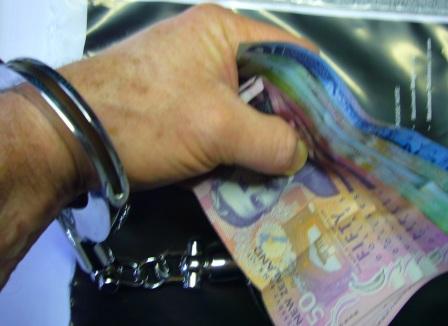
If 2011, with so much crap going on, is a "13" year, then what has 2012 got in store for us, because just after the 21st Dec 2012, WE HIT 2013... Is this the Beginning of the END ? 2013 = is all about money !